

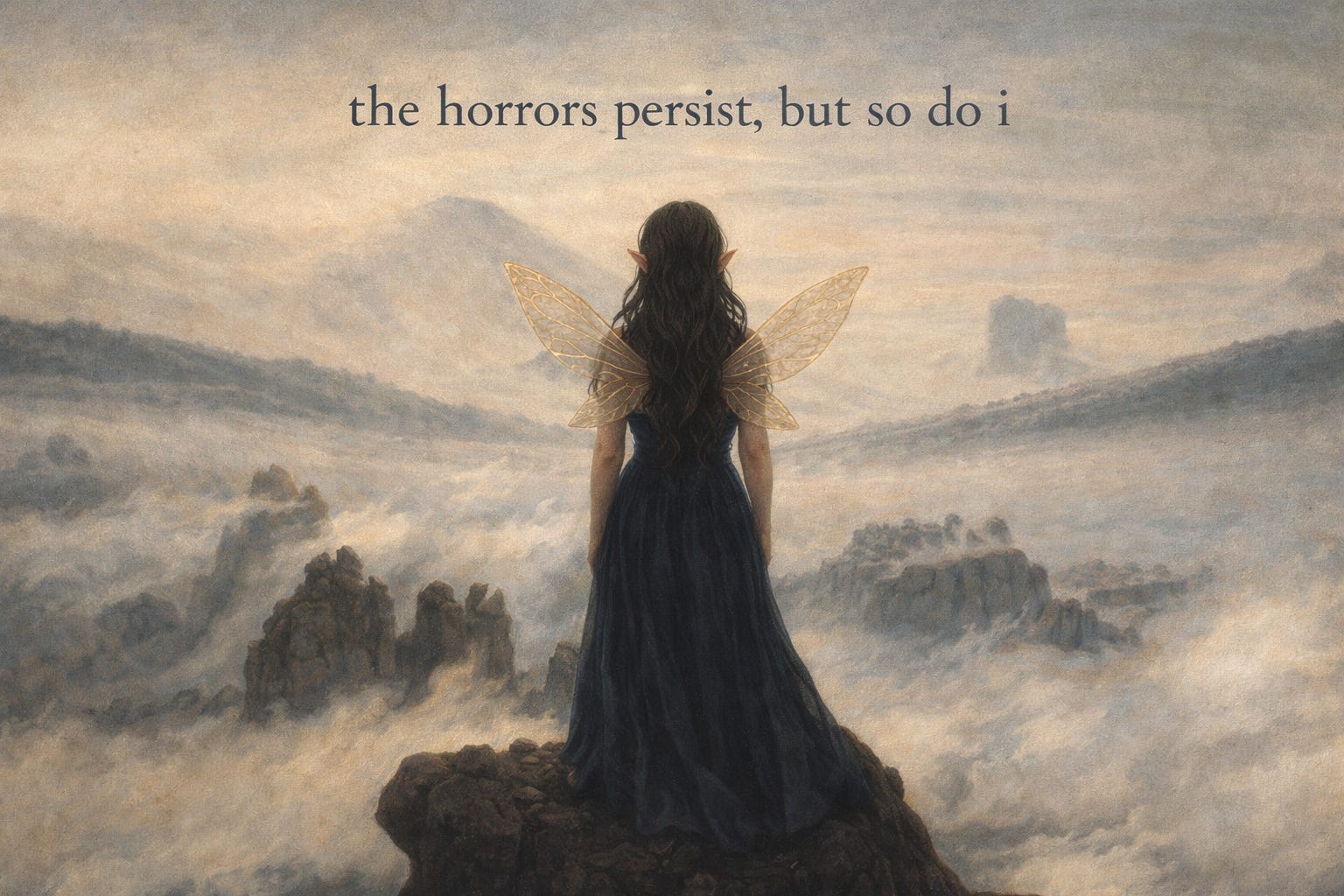
As I’m pulling my way out of a strange depression spell where I lost most of my previously very solid routine from pre-pandemic times, I thought it might be helpful for anyone else out there who might be in a similar sort of “stuck” situation if I journal my progress and changes so that it may be used as a guide for others it helpful.
The most difficult barriers to me getting to this point was that I had relapsed with alcoholism for about 2 years after 4 years sober. I’m now proudly approaching 18 months sober. I had pretty bad agoraphobia after being assaulted in public that made it difficult for me to feel safe going outside on my own, and I had crippling hypersomnia as a symptom of my depression that was being mistreated with ADHD medications, like Adderall and Vyvanse, that became difficult over time for me to manage with my addictive tendencies.
It took some time and a lot of work to get where I am now (which I would call somewhat normal functioning), and it required that I first stop drinking. This was probably one of the more difficult challenges. I’d get sober for about 2-3 months then couldn’t fight the cravings anymore and would relapse. What finally changed that for me and finally enabled me to kick my way into long-term sobriety again was that I started taking N-Acetyl Cysteine (NACs), which can help with treatment of alcoholism and PTSD comorbidity (research is linked). For the first two months, I took 600mg of NAC three times a day, in the morning, midday, and at night, which indeed suppressed the cravings and the part of the brain that tried bargaining with me to drink. After two months, I shifted to only taking 600mg in the morning and at night. Even when I forget to take them a day or two now, the cravings and bargaining for alcohol don’t come back as it helped me get past that point of the withdrawal process. I still take 600mg in the morning and at night for safe-keeping and because I’ve been making other medication changes as well that can make me less stable and more prone to relapse during those changes, or shocks, to my neurochemistry.
The agoraphobia faded with time as I spent more time outdoors with other people and some places on my own where I already felt safe like my hometown and the beach. The method for treating this form of trauma-related anxiety disorder is different from how I needed to treat my previously-existing C-PTSD, which required EMDR therapy. This time I only required simple exposure therapy with the assistance of a benzodiazepine, Klonopin, which works for longer hours and does not produce any euphoria like other benzodiazepines do for me, so I’ve found it the safest for me to take given my vulnerability to substance abuse. However, it should be noted that benzodiazepines, including Klonopin, are not typically recommended for PTSD, but it was deemed okay for me because what I was struggling with was an anxiety disorder (agoraphobia) on top of C-PTSD, which is already fairly well managed (this is where EMDR was a godsend for me) and not something I’m comfortable discussing at this time. I only very recently started taking walks on my own again to new areas and I’ll admit I was paranoid as hell the first time but the next time and each time after that, I felt safer, like I had “covered” that area already haha.
Finally, tackling the most dysfunctional part: the hypersomnia, as a symptom of depression, and its second order effects. For those who don’t know, hypersomnia is sort of like the inverse of insomnia, though you can have both by the way… God’s cruel joke, truly. Hypersomnia, for me, has always been an attempt to escape my problems through sleep, resulting in me sleeping ~18 hours a day, and still constantly being tired and feeling my bed calling me to come back to it. This is why I was initially put on Adderall and Vyvanse, both at the same time, 7 years ago, to prevent me from sleeping during the day. This worked for the first 4 years, but once I started abusing alcohol again I started abusing these medications too, especially since I was in an extremely competitive economics program at UC Berkeley at the time. It took me until a few months ago to finally admit to my psychiatrist that I couldn’t control it anymore, and to admit to myself that it was making me angry all the time, I’d grown to like how it numbed me, but that it also had made me constantly slightly delusional in a grandiose sense, as well as extremely paranoid, easy to snap at people. It wasn’t a good situation still. I wasn’t like that before when I was taking it properly either. I completely lost my sense of time too which was weird, and my memory had gotten horrific.
Rest easy knowing all these things have sorted themselves out now, well, I sorted them out. It doesn’t happen naturally, and usually psychiatrists are dimwits who will just cycle you through the same diagnostic criteria and medication treatment decision trees. Literally. I’ve seen them. I’ve used them to get the medication I thought I needed when it would be considered off-label for me. You have to learn about psychopharmacology if you want to navigate the American mental health system or you will live a miserable life and you will be unlikely to ever recover because you will constantly be misdiagnosed. Psychiatrists and even some therapists are addicted to their diagnoses. It’s a huge epistemic crisis in the field that assumes the Diagnostic Statistics Manual to be their damn bible, rather than keeping up to date on new research and learning that individuals are unique and don’t fit cleanly into little diagnostic boxes. Thankfully, I have a therapist that understands this, and much more. He was initially my abnormal psychology professor in community college. I actually got an AA in psychology while I was trying to figure my own shit out, figured it out, then decided “I don’t want my entire life to be about this,” and said fuck it, and switched to studying economics from scratch.
Anyways, being off the ADHD medications (as someone who does not have ADHD) has been a significant improvement. I can remember things better again. My memory was significantly impacted by the medication, as well as my ability to think visually. I’m no longer constantly interrupting people anymore, believing I could predict what they were going to say (ok sometimes they are very predictable, lol). I can actually think clearly, not those speedy thoughts racing around my head. I don’t have anxiety or paranoia anymore. I feel grounded and calm. But, it did take something else to treat the hypersomnia that persisted even when I was at my base line (no substances or medications). We were finally able to treat the hypersomnia with Modafinil, which works on neurepinephrine similar to Vyvanse and Adderall, but does not work on dopamine like Vyvanse and Adderall does (which is what makes more addiction-prone). So, I finally have a normal sleep-wake schedule. Yay! I’m no longer a creature of the night, a vampire. The sunlight no longer hurts my eyes.
So, now I’m working on the second order effects: how this all destroyed my routine. I started with just one goal a day: hygiene (bathe, brush teeth, wash face, etc). Then once I got this down, I started taking walks every day too, which at least got me from pajamas to exercise clothing. Now I’m focused on adding new goals with re-learning to eat right and cook again, get dressed every day, read for an hour every day (digital detox for at least an hour), and to every day, either go to the gym, take a walk, or go to beach (especially for sunsets).
As time goes on and these habits become second nature, I intend to add or expand on these goals, while still keeping my schedule relatively flexible. I do work on things often during the day like little coding projects, hardware projects, art, music, poetry, writing, and I always play with my dogs, but I hope to expand my digital detox time each day to be significantly longer than just an hour. Though I’m not sure what’s healthy for when you’re working at a computer….
Anyways, this is where I’m at so far. I’ll continue to update as my progress continues. If you’re struggling with depression or similar situations, I hope my journaling can help you too. Feel free to share or leave questions if you have them. I’ve had to deal with depression episodes on and off a few times in my life by now and have seen how off the rails they can get with improper treatment or self-medication, so hopefully I may have recommendations if you’re in a spot similar to one I’ve been in before. Please do remember though that everyone’s bodies and brains are different so what worked for me may not work for you. Hold onto hope though, you’ll find your grounding again too if you keep searching for it.
This will be an ongoing series called ‘The War Within’ under my personal memoirs on my blog as well as shared on X. I'm grateful for those who support me on my health journey and in my writing. If you would like to support my writing and health, you can become a paid subscriber or contact me regarding donations. Anything during this time really helps. Thank you.